

Working as a consultant, facilitator and coach has taught me the subtle art of not intervening. However simple non-intervening sounds, it is quite difficult to put into practice.
We tend to intervene because that is what we have been trained to do and what (we feel) we are paid for. Intervening too much will however not bring the change we intend. In fact, it will rather reinforce the system in its current behaviour and it will exhaust us. Minimizing interventions gives us space to understand and feel the system, and focus on the things that do have a lasting effect.
Born (and paid) to intervene
As consultants, agile coaches, scrum masters, mentors we tend to act: help teams, talk to individuals, lead a group through a process, guide difficult conversations. Being process minded, we are interveners by trade right? Intervening is our job! Facilitators like to facilitate. Customers pay us to intervene, right? They don’t pay us for not doing anything and just sitting on our hands…
Running an open space conference with minimum intervention
Many years ago, Willem and I started the Agile Open conference series, exploring Open Space Technology to run a participant-driven conference. We explored how little facilitation a group needs to let great interactions happen, moving towards minimalism: focusing on the small set of rules and principles from Open Space, opening up the spaces, and bringing ourselves to the floor. And then let participants work out stuff by themselves.
Setting the initial conditions and then intervening as little as needed helped participants take ownership of the process, and make the event work for them.
Some open space facilitators in the agile community try to control more of the event process and group dynamics, like immediately jumping if questions arise when participants are co-creating the agenda. Our experience is that people will figure it out without intervention. In fact, intervening too soon will reinforce a pattern of participants relying on the facilitator to solve things for them.
A systemic perspective
From a systemic perspective, the goal of a system (like a team, department, organisation) is what it does. Its current behaviour follows the path of least resistance, like water flows.
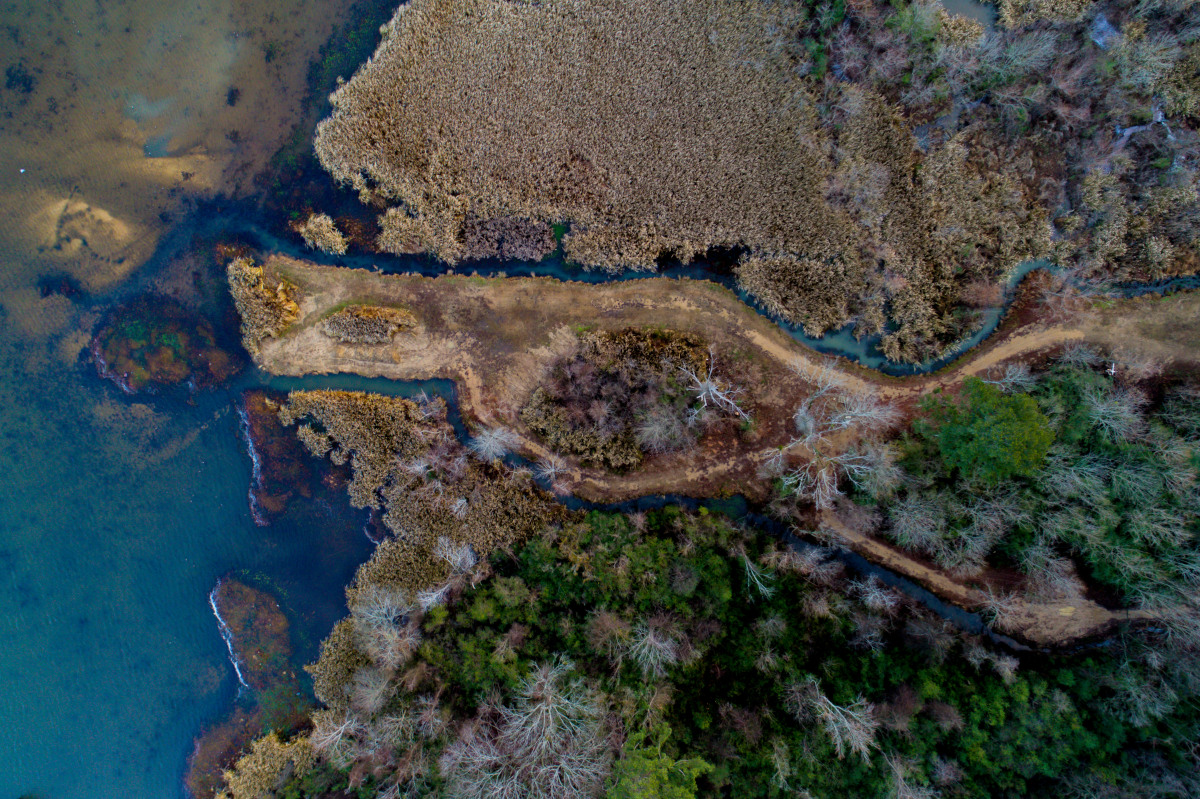
Continuously intervening in a system means continuously putting energy in. This is like trying to redirect the flow of water with your bare hands. This sounds tiring - and it is!
Interventions can weaken a system
Doing interventions in a team or an organization can have short-term positive effects, but on the longer term, it can weaken the system. A team for instance can grow dependent on a consultant to fix things. Our interventions become a compensating mechanism for the undesired behaviour rather than a structural change for the good.
The consultant becomes an indispensable part of the system to be effective. We have become a structural barrier that redirect the water flow. The longer this happens, the more difficult it becomes to leave, and the more impactful leaving will be. We have become have become part of the problem, and it is running us down.
It is like Gerald M. Weinberg observed 35 years ago in his Secrets of Consulting book as “Marvin’s First and Second Great Secrets”:
Ninety percent of all illness cures itself - with absolutely no intervention from the doctor. Deal gently with systems that should be able to cure themselves.
Repeatedly curing a system that can cure itself will eventually create a system that can’t.
Not intervening
So what can you do to non-intervene? Don’t react directly; take a step back; take a deep breath. What happens if you don’t immediately step in? Can they solve it themselves? What questions would be helpful in the situation? You might feel a bit sad about not being the hero, but heroes will only create dependence.
Friction, tension, and conflict are part of change. Often these are symptoms of something else - the system is trying to tell you something. Techniques like co-creating a diagram of effects or using Moving Questions can help to uncover the underlying dynamics and find interventions that do have a lasting impact. Or see that no intervention is needed.
Our first reactions are interventions that tend to row against the flow of the water. Instead, get a feel for the affordances of the system. These provide insight into what likely or unlikely to change in the system in its current state. In other words, it will give you insight into what shapes the paths of least resistance. Methods from can be helpful here, like Estuarine Mapping and other Cynefin methods can be helpful.
As a side benefit of not intervening, you will get more time and peace. This is especially valuable in a turbulent when everyone else is busy and running to stand still. While the system is inviting you to run along, staying calm is your superpower.
Further reading
- Gerald M. Weinberg, Secrets of Consulting, also on Leanpub
- Open Space Technology
- Ben Linders, Why Doing Nothing Can Be the Best Thing To Do
- The Agile Open conferences are still running worldwide, e.g. Agile Open Northwest, Agile Open Northern California, Agile Open Canada, and Agile Open Holland.
- I wrote the initial draft for this post a few years ago. In the mean time I learned about Wu wei, a concept from Chinese philosophy. It means something like “action through inaction” or “effortless action”.
Credits: Photo © 2017 Nathan Anderson - aerial view of land - River estuary drone view
 RSS feed