

It is the 9th of december. The Advent(ure) in System Seeing has been going for a couple of days already, thanks Ruth Malan. I enjoyed last year. I am starting late, I was bootstrapping a SaaS while running three new sessions in 8 days, and then an on-site training course (thanks, regular clients, you know who you are). That all requires a bit of focus, while being good fun.
Qwan Tracker now has a wait list, and Stephan was suggesting I would not write new applications in the weekend. So the Advent can fill that gap. Also handy while waiting for Claude Code to finish an iteration. It’s a bit of a change from fidget toys and writing notes.
Day 1
Today it was draw a bicycle, explain a salient feature, and the components that make it work.
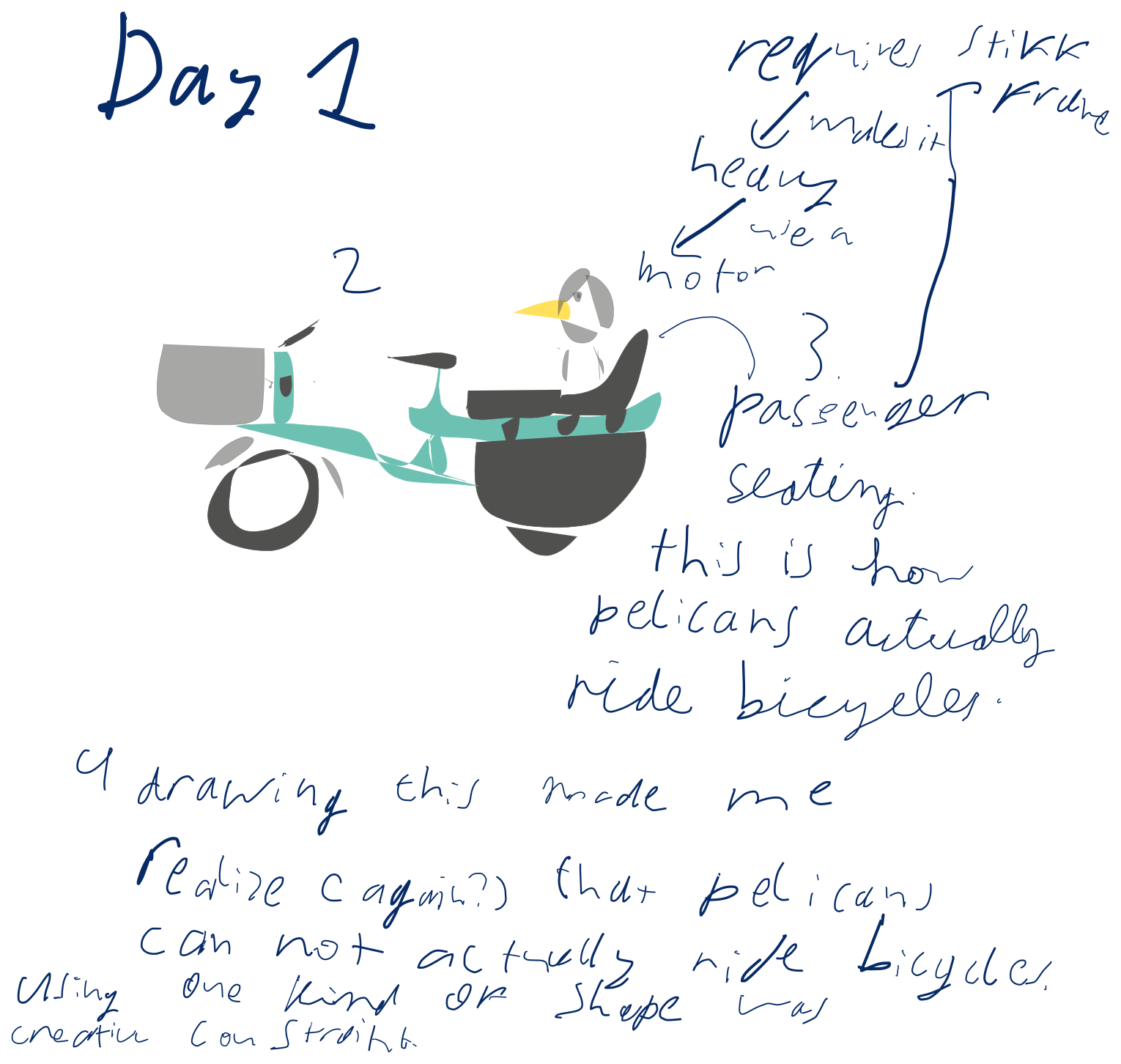
This one is a bit tongue in cheek, because 2025 was dominated by Pelicans riding a bicycle, thanks to Simon Willison, who uses this to test large language models.
I chose to draw our cargo bike, and focus on the seating for part 3 - parts, and what do they mean. I would carry people on the back of a regular bicycle when I lived in the Netherlands, but often you could feel the bike flexing. Our cargo bike is the stiffest bike I’ve ever had. Doesn’t flex (at least not what I feel) with an adult or two smaller kids on the back. But the stiffer frame makes it heavy, so a motor is required to go uphill, or make it easy to ride away after standing still.
The bag and the crate are essential. Our son pointed out that you can’t actually see as much of the frame where the bag is, and that it is held up with straps.
The black thing on the steering column is one of the two cup holders - handy for water bottles, cups of coffee and drinks cans. This is what happens when you take your kids out for a test ride and they see what is possible.
The act of drawing made me realise (again) that pelicans can not actually ride bicycles. So the pelican sits at the back. And an LLM that would pass Simon’s test is one that refuses, or asks “It looks like you are trying to draw a pelican riding a bicycle, Are you really sure?”. (next time I will draw Clippy in the picture)
Day 2
Day 2 is about drawing the bicycle in different contexts, in a bubble diagram.
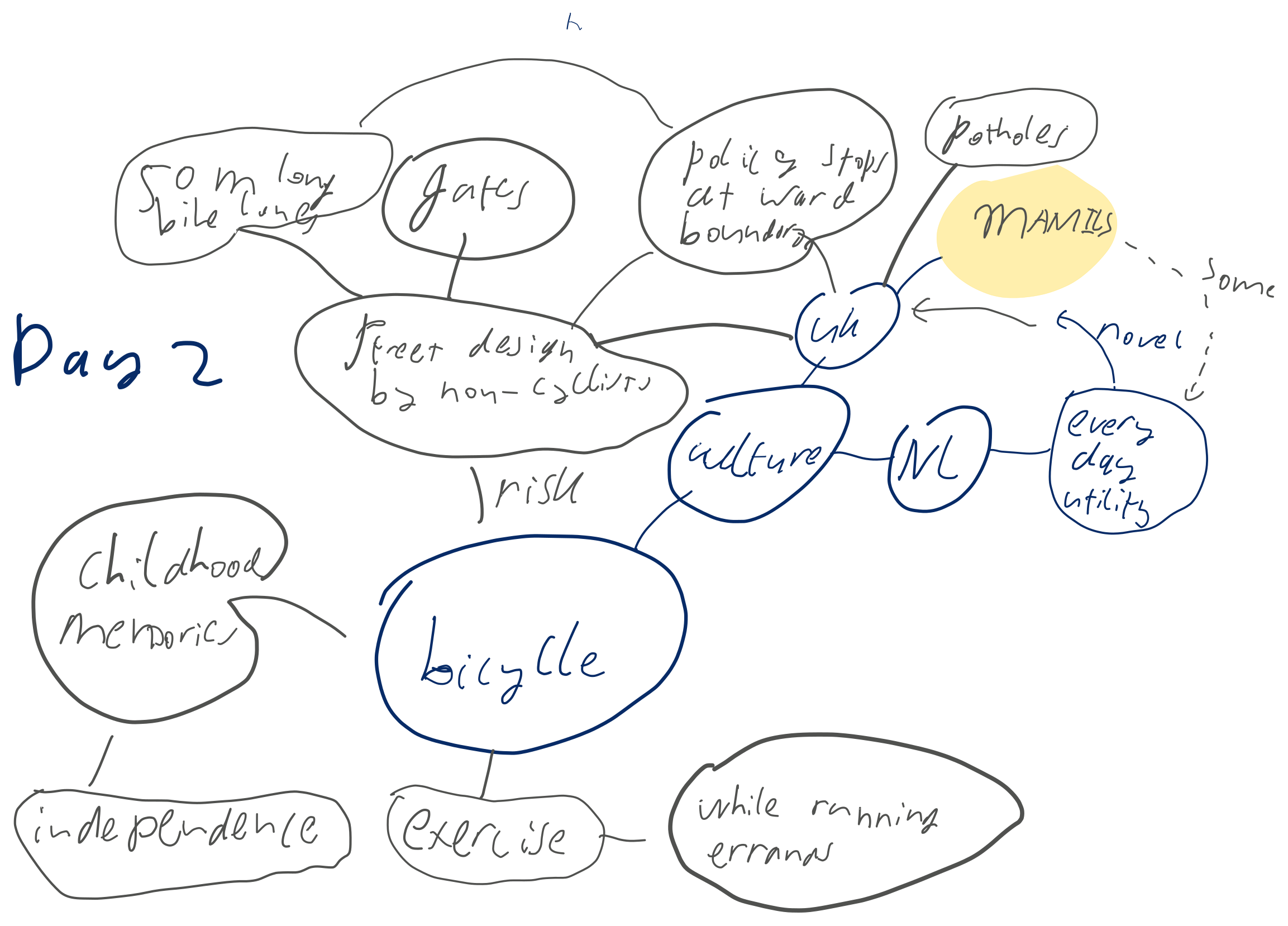
I gave MAMILS (Middle Aged Men In Lycra Suits) a bright yellow background. Part of it is culture. Living in England, coming from the Netherlands, MAMILS exist on both sides, but here cycling as a middle aged man without lycra suit is still a bit of a novelty. E-bikes are gaining traction, and making cycling accessible to more people - the hills in Bath are steep. But one of my friends was almost laughed out of a shop a few years ago when he asked for a kickstand with his new bike. So cycling as an ‘Every day utility’ is still somewhat of a novelty. Although it probably was a lot more common in and before WWII.
Policy stops at ward boundaries (a ward is what a councillor covers, they are not elected for the whole town). This is apparently how British national policy works. Not great if you want joined up cycle routes. So 50m long bike paths and than nothing is quite normal. And gates and other obstacles that make it hard to move around on a cargo bike with kids and gear.
In another context, bicycles are good for cardio exercise (although you only train a few muscles, therefore I also walk more now), while running errands (see making bicycles more accessible).
I have fond childhood memories of cycling - messing about with my friends, making trips, being independent.
 RSS feed